
Start with a complete material description
Supercritical foaming describes a processing route, not a single polymer or a guaranteed level of cushioning. BASF lists SCF injection, autoclave foaming and bead-processing routes within its Infinergy portfolio. That example shows why a development brief should identify both the candidate polymer system and how it is processed. A familiar technology name alone does not establish equivalence between two samples or transfer a supplier’s published results to another sole.
For an initial request, specify the intended application, reference size, target mass, geometry and desired underfoot feel. Ask the supplier to identify the candidate compound, manufacturing route and available sample evidence. If the formulation remains proprietary, agree which measurable properties and traceability information will be supplied instead. This keeps the discussion focused on decisions that can be checked.
Compare measurements on the same basis
Build a candidate sheet with density, hardness, thickness, mass and the methods used to obtain them. Record the hardness scale, specimen preparation and conditioning alongside every value. Ask for the test method behind any rebound figure and distinguish a material specimen result from a complete-shoe result. Values generated under different protocols should not be ranked as though they were directly interchangeable.
Use a reference sample as a discussion aid, then translate subjective words into an evaluation plan. For example, “softer” may mean a different initial impression, while “more supportive” may concern geometry or the assembled upper. Have the development team record what each tester experienced, where it occurred and which version was worn. Avoid treating one adjective as a complete technical requirement.
Distinguish a target from a verified result
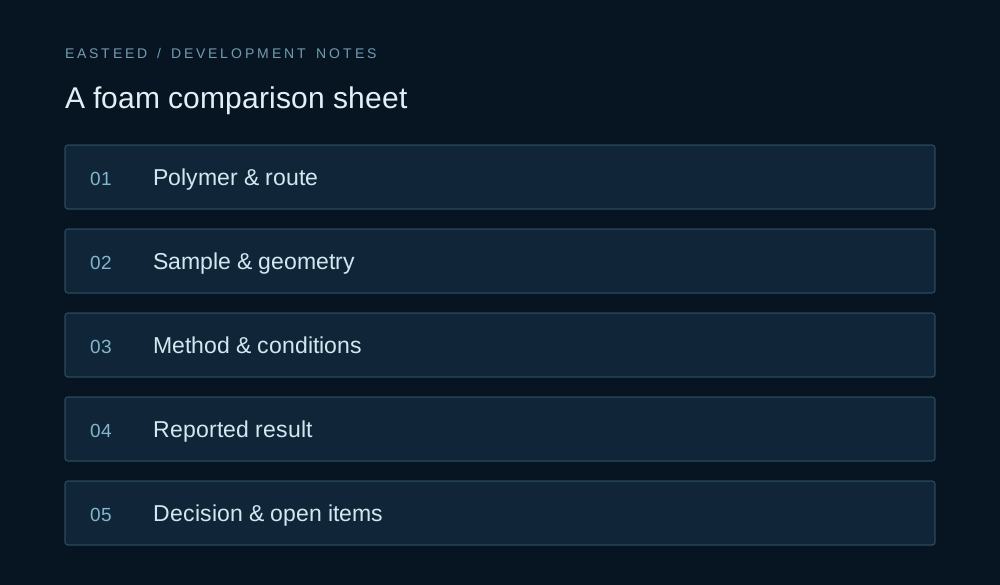
A supplier proposal should show three separate columns: your target, the result reported for the submitted sample, and the method used. If a value comes from a material datasheet rather than the actual component, label it as background information. Where no result is available, write “not yet tested” and agree the next action. This simple separation prevents a development aspiration from becoming an accidental product claim.
For example, a buyer may request a lighter daily trainer while keeping a familiar underfoot feel. The first comparison could use the same reference size and external geometry, then review candidate constructions against the agreed mass, fit and assembly requirements. If geometry must also change, record that difference. The team can still make a useful decision, but it should compare complete proposals rather than credit every improvement to the foam alone.
Before accepting promotional language, request evidence for the exact statement. A measured rebound result is not automatically a whole-shoe energy-return result, and neither by itself proves a running-economy benefit. Keep each claim attached to its specimen, protocol and scope.
Evaluate the assembled construction
A promising foam sample is only one stage in a sole programme. Plan reviews of dimensional consistency, surface appearance, bonding compatibility and the intended outsole coverage. Establish which checks apply before and after assembly. When a plate, carrier or rubber component is introduced, use a new assembly version rather than assuming the previous material review covers the new combination.
Ask for trial quantities that allow repeat measurements and destructive checks, with samples retained for comparison. Discuss color, texture and finishing at this stage: a visual change should remain traceable to a sample revision. Document acceptable variation with agreed examples instead of relying on photographs viewed on different screens.
Create a decision-ready sample request
Send a drawing or reference ID, a size range, application priorities, a proposed evaluation matrix and the commercial boundaries. Identify which targets are mandatory and which can be traded against weight, appearance or cost. Ask the supplier to return assumptions and open questions with the sample proposal.
The approval record should name the selected sample, its test evidence and the outstanding work before production release. Environmental or recyclability claims require their own supporting evidence for the actual formulation and product system; the foaming label is not a substitute. Use the first round to establish a reliable comparison, then narrow the process window with your manufacturing partner.
Sources & further reading
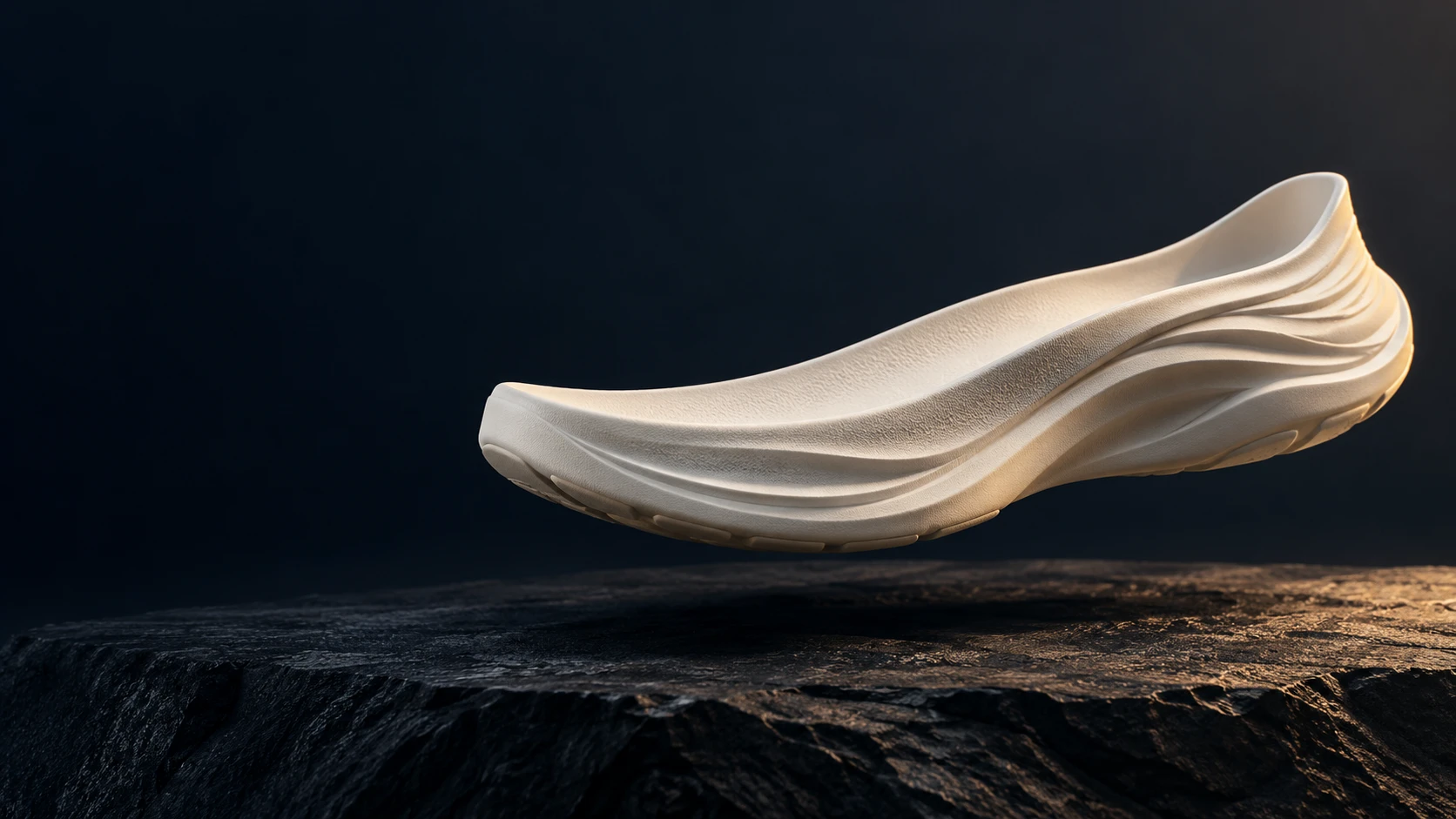
This article combines the cited technical context with Easteed editorial recommendations for project planning. It does not claim that Easteed uses the cited branded materials, holds a certification or has tested the illustrated reference.
Bring a reference.
Define the next decision.
Share the application, available drawings and the question your next sample needs to answer.
Build a project brief ↗