
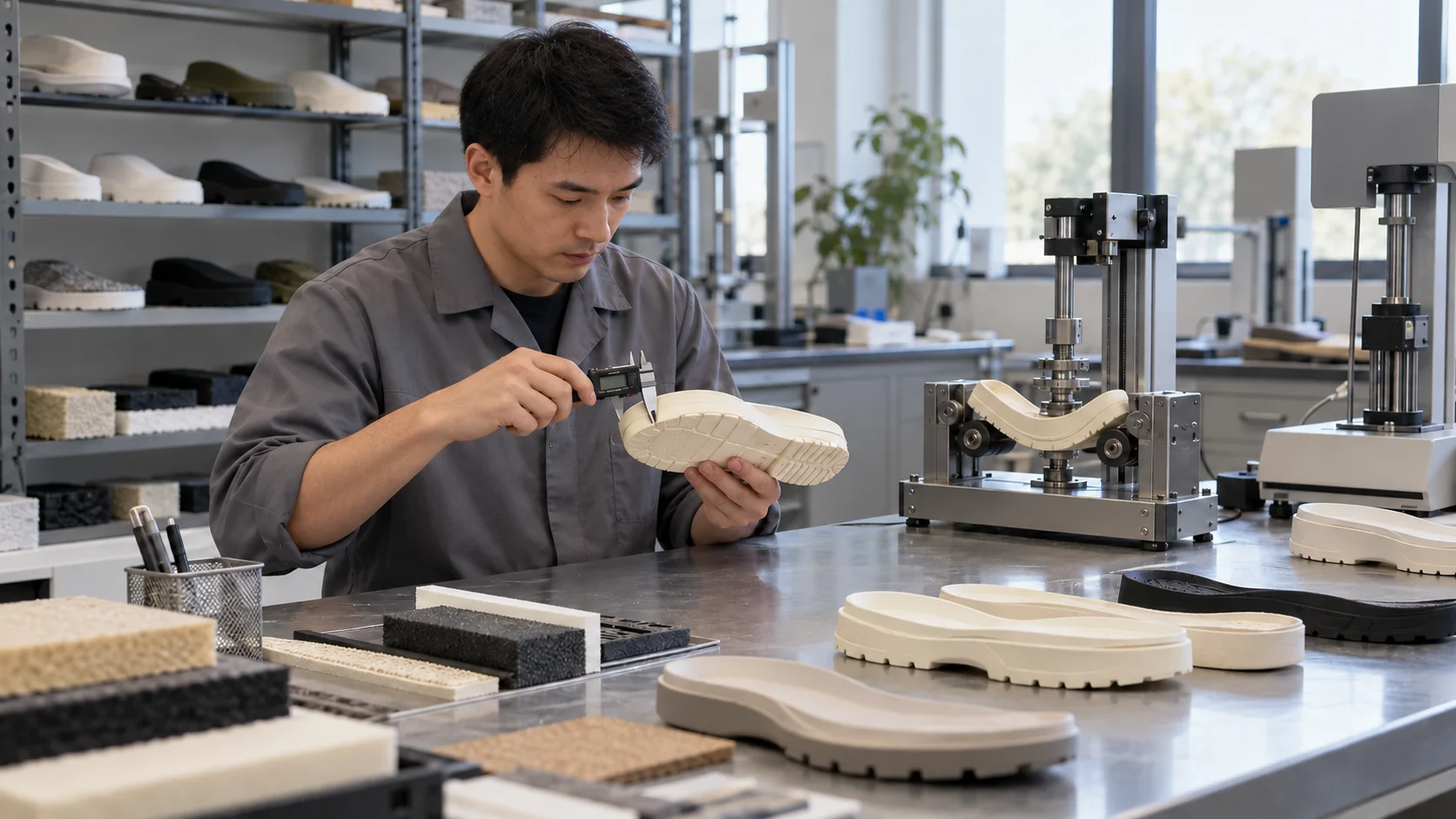
Define what approval actually covers
An attractive sample can be approved for appearance without being ready for production. Separate visual approval, dimensional review, fit assessment and performance validation in the project record. Each should identify the sample revision, the reviewer and the scope of the decision. This prevents a short message such as “approved” from carrying several different meanings.
Create the validation plan before final sampling. List the intended claims, relevant failure concerns and evidence needed for release. Hohenstein lists outsole abrasion, slip resistance and flex tests separately from whole-shoe bond testing, illustrating that they address different questions. Choosing a test name without agreeing the specimen, procedure and acceptance criteria leaves the decision incomplete.
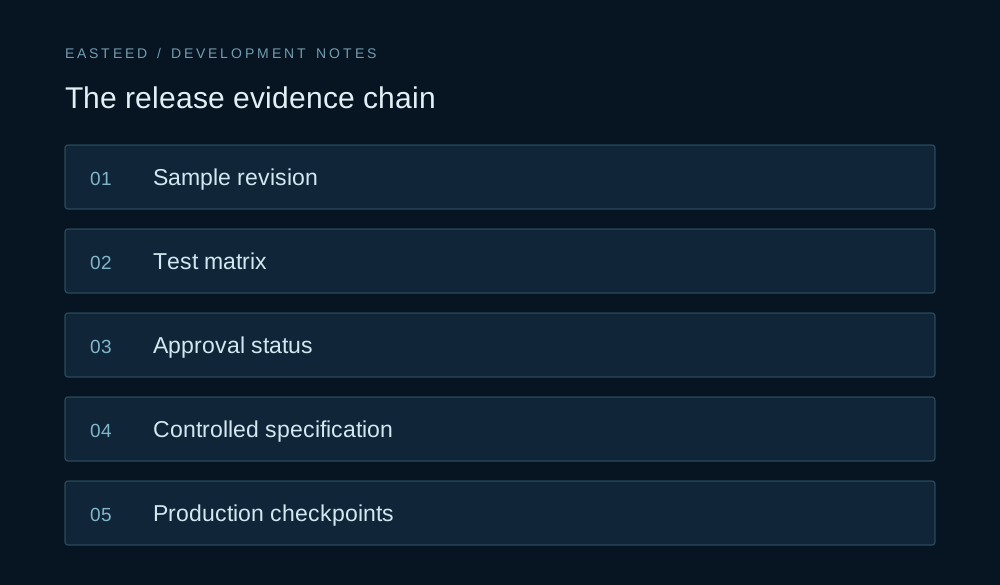
Build a traceable test matrix
For each check, record the method and edition, sample type, conditioning, quantity, laboratory and acceptance criteria. Have the qualified testing partner confirm which procedures are appropriate for the product and market. Do not copy a threshold from an unrelated shoe or infer a mandatory requirement from a method’s existence.
Tie every submitted specimen to the material batch and sample revision where that information is available. State whether the result applies to a material sheet, sole unit or complete shoe. Keep photographs and reports together with the drawing revision. A result is useful only when the team can identify the construction it represents.
Resolve exceptions before they become production instructions
An approval register should distinguish accepted, rejected and pending items. For a pending item, name the required evidence, responsible person and next review. For an accepted deviation, describe the scope: which component, size, colour or production quantity it covers. Avoid a general waiver that can be interpreted as permission to change future production without review.
For example, appearance may be accepted while a bond result is still pending. Record those decisions separately and make the release condition explicit. If a substitute material is proposed because the approved grade is unavailable, do not rely on a similar commercial description. Request the proposed specification and determine which earlier checks remain relevant before approving the substitution.
The manufacturing handover should also identify where current documents are stored and who can issue a new revision. Remove superseded instructions from active use while retaining them in the project history. This is especially useful when designers, sourcing staff, sample rooms and inspection teams work across different time zones. A concise decision record is more reliable than an informal approval embedded in a long conversation.
Evaluate the assembly and the change history
Include checks appropriate to the interfaces between the upper, midsole, plate and outsole. Discuss the relevant environmental exposure and repeated-use conditions with the laboratory and manufacturing team. A satisfactory incoming material result does not by itself establish that the assembled product meets the project requirements.
Maintain a change log for materials, suppliers, geometry, color and processing decisions. When a change is proposed, identify which approvals it could affect and agree the evidence needed before release. The purpose is not to retest everything automatically; it is to make the reason for repeating or retaining a result explicit.
Close the loop with manufacturing
Before bulk production, retain an approved reference sample and a signed specification set. Agree how incoming materials, in-process checks and final inspection will relate to that reference. Define how deviations are recorded, who can authorize a disposition and how affected product is identified. Keep commercial acceptance separate from technical approval.
Use pilot or initial production reviews to confirm that the agreed construction can be reproduced within the project tolerances. Compare the relevant measurements and appearance against the approved reference. Record exceptions with a corrective action and a responsible owner instead of resolving them through informal recollection.
A useful release pack contains the final drawings, bill of materials, sample identification, relevant reports, approved appearance standards and open-issue status. Where verification is still pending, say exactly what remains. This gives the buyer and manufacturer a shared basis for proceeding and makes later troubleshooting more efficient.
These steps are a suggested project workflow, not a certification claim. The actual test programme and release criteria must be agreed for the specific product, target market and intended use.
Sources & further reading
This article combines the cited technical context with Easteed editorial recommendations for project planning. It does not claim that Easteed uses the cited branded materials, holds a certification or has tested the illustrated reference.
Bring a reference.
Define the next decision.
Share the application, available drawings and the question your next sample needs to answer.
Build a project brief ↗