
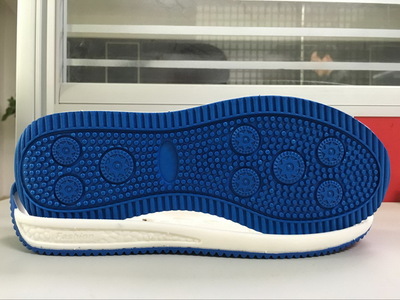
Start with the movement and the surface
Road running and court sports should be separate collection entrances because buyers begin with different use cases. SATRA notes that sports involving rapid stops, starts and directional changes create particular challenges for sole design. A category should therefore communicate the intended application clearly, rather than group unrelated soles under a broad performance label.
For a road programme, describe daily training, longer sessions or racing as intended uses. For a court programme, specify the sport and playing surface. Basketball, tennis, volleyball and badminton can share a high-level navigation group while still requiring distinct development briefs. A familiar visual pattern is not sufficient evidence that a reference suits all four.
Turn the use case into review questions
Ask the road-running team how the proposed construction will be evaluated for the intended motion, fit and wear conditions. For court use, include how the complete shoe will be assessed during directional changes, stops and landings relevant to the chosen sport. These are evaluation questions, not promises that a particular geometry will produce a given result.
Review the upper and sole together. Define who owns the last, upper interface and complete-shoe testing. If the project covers only a sole unit, identify which results remain dependent on the final assembly. A component supplier should not be expected to certify a complete shoe that has not yet been built.

Make traction specific
Name the surface, indoor or outdoor setting, and relevant contamination conditions in the test brief. Ask a qualified laboratory which setup suits the intended claim. SATRA TM144 describes friction testing under specified walking-related conditions; it should not be treated as a universal simulation of every court manoeuvre. A protocol must match the question being asked.
For an indoor product, discuss any non-marking requirement as a separate item and agree how it will be checked. For an outdoor product, document the expected surface and abrasion concerns. Avoid assuming that a result on a clean laboratory surface predicts every venue or that “outdoor” describes one uniform environment.
Use a practical two-programme example
Consider a brand planning a daily road trainer and an indoor court shoe for the same season. It may wish to explore a shared foam family, but that does not make the two sole briefs interchangeable. Create a common material-information sheet, then attach separate geometry, surface and assembly requirements to each programme. Review any proposed savings from shared materials against the development work still needed for both products.
For each sample round, ask the reviewers to use application-specific questions. A running transition comment should remain attached to the running sample and conditions. A court reviewer’s observation during a directional change belongs to that complete shoe, on that surface, with that wearer. Record the observations in consistent language and avoid converting a small subjective panel into a quantified performance claim.
A good supplier response identifies the scope of each proposal and the unanswered questions. It should not simply attach the same material datasheet to both projects. The decision is whether each candidate deserves the next stage of evaluation, not whether the material name sounds appropriate to both categories.
Build separate decision sheets for road and court
Use an application sheet for each programme, even when two projects share a material candidate. The road sheet can name the intended training or racing use, reference size, sole profile and evaluation priorities. The court sheet should also identify the sport, venue surface and movements that the complete shoe must be assessed against. The purpose is to prevent a material decision from silently becoming an application approval.
When shortlisting archive references, annotate the feature that interests you: overall proportion, sidewall geometry, outsole coverage or a particular visual treatment. Request the missing technical information before assigning a narrow sport designation. Age group and size grading should remain separate inputs, so a junior model is reviewed on its own requirements instead of being treated as a scaled adult shoe.
The outcome should be two clear development briefs with named owners for the sole component and the complete-shoe evaluation. That lets a supplier explain what can be proposed now, what requires physical samples and which questions remain with the brand or assembly partner.
Sources & further reading
This article combines the cited technical context with Easteed editorial recommendations for project planning. It does not claim that Easteed uses the cited branded materials, holds a certification or has tested the illustrated reference.
Bring a reference.
Define the next decision.
Share the application, available drawings and the question your next sample needs to answer.
Build a project brief ↗