
Define the job before selecting the component
A carbon plate is a construction choice within a complete shoe. In a study of one Vaporfly model, Healey and Hoogkamer reduced plate stiffness by cutting the forefoot plate and found no significant difference in running economy under their test conditions. This does not prove that plates are ineffective. It illustrates the difficulty of separating a plate from the foam and geometry around it. Development should evaluate the proposed shoe system rather than promise a universal benefit from a component label.
Clarify whether the project is a race-focused model, a training companion or a broader performance concept. Record the intended distances, expected use frequency and fit requirements as design inputs. These inputs do not predetermine a successful plate; they establish what the team needs to evaluate. Keep material marketing language separate from the measurable objectives in the brief.
Make the interface visible
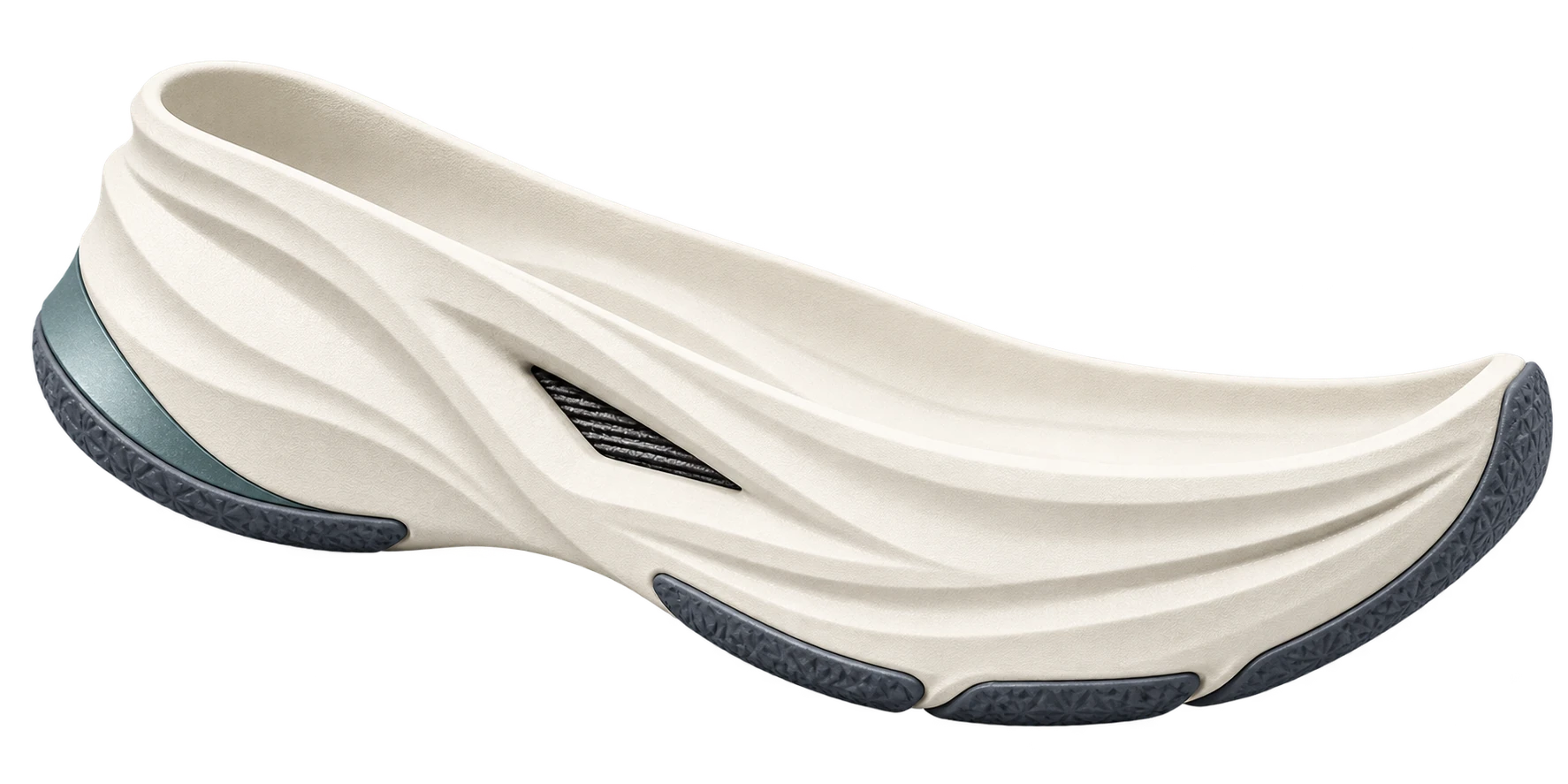
Request a section drawing that identifies plate position, surrounding foam thickness, attachment strategy and the relationship to the last. Include the outsole and upper interface in the review. A side-view rendering can communicate the visual direction, but it does not replace the dimensions needed to discuss assembly.
Ask the component partner to explain how geometry and construction will be controlled across sizes. Identify the nominated development size and any sizes that need separate evaluation. Record the proposed material, thickness specification and permissible variation in the supplier documentation, with confidential information exchanged through the appropriate project channel.

Write a comparison matrix that protects the decision
Give the first prototype round a narrow purpose. One possible matrix compares a reference construction with two plate concepts while documenting every other change. Record the last revision, sample size, sole geometry, foam specification, upper, outsole coverage and assembly version for each pair. This is a suggested planning format, not a prescribed laboratory protocol. The appropriate comparison depends on what the team is trying to learn.
Decide in advance what will trigger a revision. If the first question is whether the assembly can be produced consistently, appearance and dimensional checks may come before a wearer study. If it concerns transition during running, agree a suitable evaluation with the complete-shoe team. Avoid using a positive comment about softness to close a question about durability or bonding.
Keep unsuccessful prototypes in the project record. A short note explaining why a direction was rejected can prevent it from returning later under a different drawing number. The deliverable from this stage is a ranked set of constructions, the evidence behind the ranking and a clearly defined next sample.
Use prototypes to answer one question at a time
Create a small comparison plan with clearly identified variants. Where practical, change one major variable at a time and keep the reference construction available. If several variables change together, describe the result as a comparison of complete systems rather than assigning the difference to the plate alone.
Combine structured wearer feedback with laboratory work selected for the application. Ask testers about fit, transition, perceived stability and local discomfort using the same questions for each variant. Capture the conditions and sample IDs. A small development panel can guide iteration, but it does not establish a universal performance improvement or justify an unsupported injury-prevention claim.
Plan approval beyond the first wear
Include repeated-use evaluation, inspection for component movement or damage, and review of the bonded interfaces in the validation plan. Agree the relevant procedures and acceptance criteria with qualified testing partners. SATRA describes flexing, cushioning and traction as distinct parts of sports-footwear evaluation; a single favourable measure cannot cover the full shoe.
Before tooling release, close the drawing revision, sample identification, size strategy and planned checks. If the product is intended for regulated competition, have the brand confirm the applicable event rules and approval requirements at that time. Do not infer eligibility from the presence of one plate or a familiar silhouette.
A useful first enquiry includes the target use, a reference size and last, the desired sole profile, benchmark samples and a clear statement of what is open to change. That allows the development team to propose a coherent system and explain the tradeoffs before detailed tooling work begins.
Sources & further reading
- Healey & Hoogkamer — Longitudinal bending stiffness does not affect running economy in Nike Vaporfly Shoes
- SATRA: sports footwear testing
This article combines the cited technical context with Easteed editorial recommendations for project planning. It does not claim that Easteed uses the cited branded materials, holds a certification or has tested the illustrated reference.
Bring a reference.
Define the next decision.
Share the application, available drawings and the question your next sample needs to answer.
Build a project brief ↗